

If you manage security for an older building, there’s a good chance some of your cameras carry a small “CCD” label on the housing, a reminder of the sensor technology that powered most CCTV systems from the 1980s into the 2010s. Those cameras may still be recording, but the industry has largely moved on, which makes it harder to find replacements, connect them to modern systems or simply know whether they’re worth keeping.
Read on to discover what a charge-coupled device (CCD) camera is, how it works, and other useful information. You'll also see why most security cameras have moved to CMOS sensors, and what that means if your building still runs on older CCD cameras.

What is a CCD camera? #
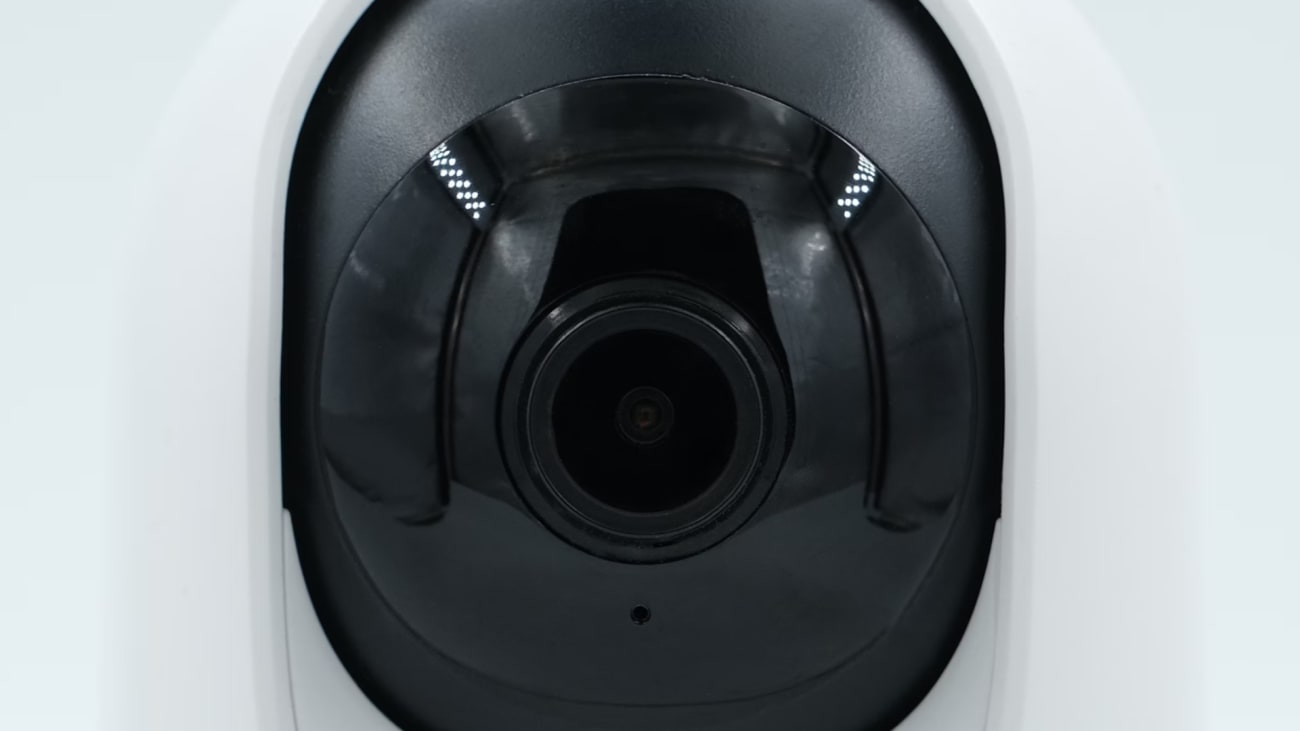
A CCD camera is a camera built around a charge-coupled device (CCD), an image sensor whose light-sensitive cells collect an electrical charge in proportion to the light that hits them. The sensor then shifts those charges across the chip and reads them out to build an image. CCDs powered most CCTV cameras for decades, although nearly every security camera sold today uses a CMOS sensor instead.
In cameras, CCD enables them to take in visual information and convert it into an image or video. The name comes from the way the sensor moves its charges, passing each one to the neighboring cell like a bucket brigade until it reaches the edge of the chip. Most CCD security cameras were analog, which means they sent their signal over coaxial cable to a DVR that digitized and stored the footage.
This allows for the use of cameras in access control systems because images no longer need to be captured on film to be visible. Security cameras, using the techniques of CCD, can relay live visual information, which is hugely important when monitoring your facility.
For roughly three decades CCD sensors were the default in CCTV, which is why the term still appears on spec sheets, camera labels and older installations in commercial buildings. When CCD security camera systems are coupled with motion sensors or video verification, for example, they can capture the image of cardholders who are attempting to enter a protected space.
How does a CCD camera work? #
In terms of the working principle of CCD cameras, these video cameras capture an image and transfer it to the camera’s memory system to record it as electronic data. Their main accomplishment was producing clean, low-noise images with very even quality across the frame. Basically, the camera turns light into electricity. A CCD camera forms light-sensitive elements called pixels, which sit next to each other and form a particular image.
Every frame a CCD camera records goes through the same sequence:
- The lens focuses light onto the sensor's grid of pixels.
- Each pixel converts the incoming light into electrons through the photoelectric effect and holds them, so brighter parts of the scene build up a larger charge.
- When the exposure ends, the chip hands each row of charge to the next until every row has passed through a readout register at the edge of the sensor.
- A single output amplifier converts each charge packet into a voltage, one pixel at a time.
- That analog signal is digitized, either inside the camera or, in most CCTV setups, by the DVR the camera connects to.
Because every pixel passes through the same amplifier, CCD images were remarkably uniform and low in noise. The same design made the sensors slower, more power-hungry and more expensive to produce than CMOS, a disadvantage that grew once security video moved to HD. A single CCD also records only brightness, so color cameras place a mosaic of red, green and blue filters over the pixels to reconstruct the full image.
Which security camera system is right for your facility?
Explore side-by-side reviews of the top video security solutions in the market.
CCD vs CMOS #
CMOS (complementary metal-oxide-semiconductor) sensors do the same basic job as CCDs, turning light into an electrical signal, but every pixel has its own amplifier and the processing sits on the same chip. That single design difference explains most of what separates the two.
Lower production costs and faster readout for high-resolution video pushed manufacturers toward CMOS, and on-chip processing made it the natural fit for network cameras. Sony, the largest CCD maker, announced in February 2015 that it would end CCD production and invest about $900 million in CMOS, although it kept shipping its remaining sensors through 2025.
Manufacturers no longer build CCD security cameras, so any camera you buy for your building now will have a CMOS sensor, and the more useful question becomes what to do with the CCD cameras you already have.
CCD cameras in CCTV: are they still used for security? #
A classic CCD security camera sends an analog video signal over coaxial cable to a DVR, which digitizes, compresses and stores the footage. Resolution was measured in TV lines (TVL) rather than megapixels, and night vision came from a ring of infrared LEDs around the lens, which the sensor picked up as black-and-white video.
Two technologies replaced it. HD-over-coax standards such as AHD, HD-TVI and HD-CVI kept the existing coaxial cabling but moved to CMOS sensors and far higher resolution, which is why CCD and AHD cameras are so often compared. IP cameras went further, sending digital video over the network and processing it inside the camera itself. Some early IP cameras did use CCD sensors, but nearly all current models use CMOS, because on-chip processing and lower power draw suit cameras that run over PoE.
Plenty of older buildings still run CCD cameras, and they will keep recording until they fail. It's worth planning a replacement when:
- replacement cameras and parts become hard to find, since manufacturers have stopped producing CCD security cameras
- the footage is too low in resolution to identify a face or a license plate
- the DVR offers no remote access or no longer receives firmware and security updates
- you want camera footage linked to door events, which an analog system can't provide because it has no way to communicate with your access control
You have three realistic upgrade paths. Swapping to HD-over-coax cameras with a hybrid DVR lets you reuse your cabling, while video encoders can bring existing analog cameras onto an IP network as a stopgap. Replacing them with IP or cloud-managed cameras costs more upfront, but it's the only route that integrates cleanly with cloud access control, and it lets you choose a dome or bullet form factor for each location.

How much can a CCD camera cost? #
Analog CCD security cameras are now some of the cheapest cameras on the market, although the low prices reflect a shrinking supply of old stock rather than good value.
The pricing of CCD cameras depends on the physical size of the CCD. Most CCD security cameras used a ⅓-inch sensor, while budget models often had a smaller ¼-inch one. Cameras that are more expensive have a CCD of ⅓ of an inch or larger. The bigger the sensor, the more light it can capture. This means that in low light settings, the camera will produce better video.
A ⅓-inch Sony CCD camera rated at 700TVL, a common spec for the last generation of analog CCTV, typically lists for $25 to $55 new on eBay, and specialist retailers such as Custom Video Security priced comparable bullet cameras at around $60 before selling out. Used units can go for about $10 plus shipping, but finding exact matches for an existing system gets harder as remaining stock runs down.
If what you really need is a budget for replacing an old system, start with what a camera upgrade costs as part of your wider security spend.
Integrating cameras with your access control system #
When choosing an access control system, you can also make sure your cameras can be paired with the solution you select. An analog CCD system can't connect to cloud access control on its own, because it has no network connection and its footage lives on a local DVR, so linking video to door events requires IP or cloud-managed cameras.
Kisi, for example, offers an integration with Cisco Meraki to offer enhanced remote monitoring of your facilities, alongside video integrations with Eagle Eye Networks, Lumana, Rhombus Systems, Spot AI and VORTEX by VIVOTEK. This way, you can track entries with visual snapshots, detect intrusion, and provide additional context for any security-related events.
Once your cameras are connected, video clips attach to the matching unlock event in Kisi's Event History, and with VORTEX cameras you can watch live video next to real-time unlock events in Live Monitoring.
If part of your system has already moved to IP, Kisi's bring-your-own-camera option connects ONVIF-compliant IP cameras from other manufacturers through a VORTEX NVR, so their footage shows up against your door events. Analog CCD cameras aren't supported, which makes the move to IP the first step.

Frequently asked questions #
What does CCD stand for in a camera? #
CCD stands for charge-coupled device, the image sensor that turns incoming light into electrical charge and then shifts that charge across the chip to be read out as an image.
Is CCD better than CMOS? #
CCD once led on image quality and low noise, but modern CMOS sensors have caught up or overtaken it while being cheaper, faster and more power-efficient. That’s why security camera manufacturers have moved their product lines to CMOS.
Do IP cameras use CCD sensors? #
A few early IP cameras did, but almost all current IP cameras use CMOS sensors, because on-chip processing and lower power consumption suit network cameras.
Are CCD cameras good for night vision? #
CCD CCTV cameras handled low light well for their time and used infrared LEDs to record black-and-white footage at night. Current CMOS cameras with back-illuminated sensors generally capture clearer night footage, often in color.
What is the difference between CCD and AHD cameras? #
CCD describes the image sensor, while AHD describes how the video travels. AHD is an HD-over-coax standard, usually paired with a CMOS sensor, that replaced analog CCD cameras on the same cabling at much higher resolution.