


Contrary to what some people may think, running a martial arts studio goes beyond trainers and memberships. Whether it is a traditional karate dojo, a Brazilian jiu-jitsu (BJJ) academy, a Muay Thai gym, or a mixed martial arts (MMA) facility, it’s more than a room with mats on the floor. It is an environment that warrants the same level of security and management as any other fitness space (within its own limitations, of course).
Martial arts studios should remain secure, organized, and accessible to the right people at the right time. The US martial arts industry was valued at approximately $21 billion in 2025, with more than 72,000 studios operating nationwide. As the industry grows and competition intensifies, studio owners are under increasing pressure to operate efficiently.
Traditional key-based entry falls well short of these demands. Modern door entry systems have become the standard solution for martial arts studios that want to run leaner, protect their facilities, and deliver a better experience for everyone who walks through the door. In this guide, we’ll explore how door entry systems work, why they are useful for martial arts studios, and what features studio owners should look for when choosing a solution.

What is a door entry system for a martial arts studio? #
A door entry system is an access control solution that replaces or supplements traditional mechanical locks and keys. Instead of issuing physical keys to every member, instructor, and staff member, the studio installs electronically controlled locks on its doors and manages who can open them through software.
The core components of a door entry system are:
- Reader: a device installed at the door that reads the credential presented by the person trying to enter. This might be a card, a fob, a smartphone, or a QR code.
- Controller: the hardware unit that processes the credential and sends a signal to unlock (or keep locked) the door. The Kisi Controller Pro, for example, can manage up to four access points from a single device, making it well suited for studios with multiple doors or zones.
- Credentials: mobile access, QR codes, cards, or fobs used by members and staff.
- Access management software: the platform where administrators manage users, permissions, and entry schedules
When a user presents a valid credential, the system verifies their permissions and unlocks the door. If the user does not have access rights, the door remains locked.
Modern access control systems are usually cloud-based, allowing studio owners to manage doors remotely, update permissions instantly, and monitor activity across one or multiple locations. This approach makes it much easier to adjust access. For martial arts studios that host trial classes, seminars, or special events, some systems also support temporary credentials such as QR codes, which can be issued to visitors and automatically expire after use.
Why martial arts studios need controlled entry #
Martial arts studios operate differently from many other types of fitness facilities. They often host a mix of structured classes, open training sessions, and private lessons throughout the day. That means they receive a host of different people with different needs and requirements from that space. In such a versatile environment, a controlled entry system helps owners maintain not only security but also daily operations running smoothly.
Managing member access #
Most martial arts studios rely on memberships or recurring class subscriptions. When a membership expires or a payment lapses, access should end. When a new student signs up, access should begin. A traditional key or fob system complicates matters since these changes will naturally require manual intervention. At some point, someone must physically recover a key or deactivate a fob and then it becomes a vicious cycle.
With a modern door entry system integrated into a studio management platform, this process is automated. When a membership is created, modified, or cancelled in the management software, the access permissions update accordingly. This also prevents the common problem of former members continuing to enter the facility after their subscription has ended.
Supporting flexible training schedules #
Many martial arts academies have evolved well beyond standard business hours. It is increasingly common for studios (particularly BJJ gyms and MMA facilities) to offer early morning conditioning sessions, late-night open mat, and unstructured training time for advanced members outside of scheduled classes.
Modern door entry systems allow studio owners to set specific access schedules for different users. For example, instructors may receive full-day access, while students can only enter during scheduled training hours.

Protecting equipment and facilities #
A well-equipped martial arts studio is a significant capital investment. There are mats, heavy bags, grappling dummies, training weapons, protective gear, strength and conditioning equipment, which can all add up to tens of thousands of dollars.
Controlled entry limits access to the facility and specific zones within it to authorized users only. That, plus having a constant view over access logs which provide a record of who entered the building and when, which is valuable in the event of an incident.
Reducing front desk workload #
Many martial arts studios operate with minimal administrative staff. In smaller academies, the head instructor often doubles as the business manager, ending up handling memberships, scheduling, and day-to-day operations. Time spent on manual administrative work is time not spent teaching or growing the business.
Automated entry systems reduce the need for that and gain you time. For example, mobile access credentials allow members to unlock doors using their smartphones, so there is no need for physical keys or constant staff supervision.

Exploring ways to reduce front desk workload?
Automate visitor management and eliminate manual processes.
Features to look for in a martial arts studio door entry system #
Access control systems are not created equal. These are the features that matter most for a martial arts studio environment.
Mobile access #
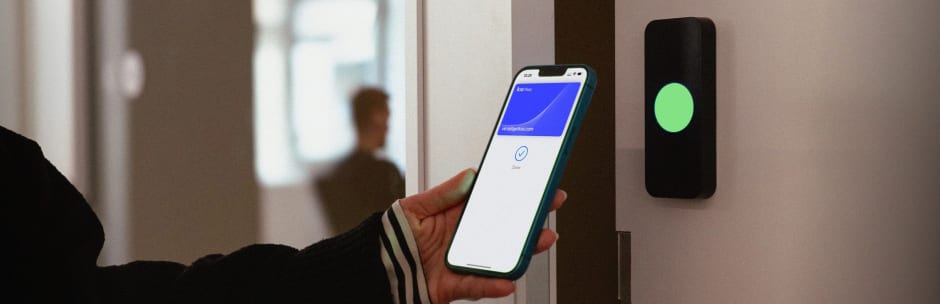
Mobile-based access (where members unlock doors using their smartphone or smartwatch) is the most convenient and increasingly the most common credential type for fitness and wellness businesses, since people in general carry their phones everywhere. Mobile credentials can also be revoked immediately if a membership expires or a credential is compromised, improving overall security.
Remote access management #
Studio owners and managers need to be able to control access even when they are not on site. With remote management, operators can:
- Add or remove users
- Update access permissions
- Unlock doors remotely
- monitor entry activity
Platforms like Kisi offer a centralized dashboard that supports all of the above, accessible from any device with an internet connection.
Entry logs and activity tracking #
Ideally, in any environment that multiple people pass through in a day, you can have detailed, timestamped records of everyone who entered, through which door, and when. A good door entry system can provide these entry logs, which can be useful for reviewing attendance patterns, resolving disputes, or investigating potential security issues.
Access logs can also help studio owners understand how frequently different areas of the facility are used, which can inform decisions about scheduling, staffing, and facility management. Most modern cloud-based access control systems store these logs securely and make them accessible through reporting dashboards.

Integration with membership or booking systems #
Let’s say you want to connect your access to bookings. That can be easily done since many martial arts studios use management platforms to handle memberships, payments, and class scheduling. A door entry system that integrates with these platforms can automate access permissions based on membership status.
For example, when a student signs up for a membership, access can be granted automatically. If the membership expires or is canceled, the system can revoke access without requiring manual intervention.
Types of door entry systems martial arts studios can use
Martial arts studios have several credential options available to them. The right choice depends on a few factors (studio's size, operational priorities, etc), but common options include:
- Mobile phone access: Members unlock doors using a smartphone or smartwatch. Mobile credentials are easy to issue and revoke and eliminate the need for physical keys.
- Keycards or key fobs: Although a bit outdated, many studios prefer physical credentials or have younger students who may not use smartphones. These typically use RFID or NFC technology.
- QR code access: QR credentials can be configured to expire automatically after a set time and are useful for temporary access (trial classes, guest instructors, seminars, events, etc.).
- PIN codes or keypad entry: Users unlock the door by entering a personal code. This method is often used for instructors, staff members, or smaller facilities that want a simple credential system.
Simplify access in your martial arts studio with Kisi #
One of the best parts of any fitness space, but especially for martial arts studios is the community centered around teachers. That should be the main focus but sometimes, administrative tasks take away from the time owners can spend nurturing the community.
A modern door entry system removes the operational burden of access management, so that now, you can spend less time at the front desk and more time on the mat. Platforms like Kisi allow martial arts studios to manage access through a centralized dashboard, issue mobile credentials to members, and monitor entry activity without being on-site.
If you're looking for a simpler way to manage access to your martial arts studio, Kisi’s access control system can help you secure your facility while keeping entry convenient for members and staff. Book a demo with our team to see how this solution can improve your operations.

Ana Coteneanu
Content writer @ Kisi | Ana focuses on long-form content that explores access control, space monetization, security, and modern workplace operations. With a background in technology-driven industries, she specializes in turning complex topics into practical insights for business audiences.
