


Opening a gym sounds straightforward until you start pricing it out. The reality is that startup costs vary widely depending on your location, the type of gym you’re building, and how you plan to operate it day to day. Let’s say you have a small training studio, a 24/7 access club or a climbing or CrossFit gym. All of these come at different price points.
Another thing to consider right now is your staffing-to-technology ratio. Forward-thinking owners are now trading high monthly payroll for one-time investments in cloud-based access control and smart infrastructure. Things like this can add or cut from your bottom line. In this guide, we’ll break down how much it costs to open a gym, what factors matter most when building your budget and how expenses differ by gym type.

Quick overview: what it typically costs to open a gym #
Core factors that influence the cost to open a gym #
Two gyms can have completely different startup budgets because there are plenty of factors that come into play. Even if they have the same square footage, the cost differences are down to a handful of core decisions made early.
1. Facility condition and build-out #
The space is usually one of the single biggest cost drivers. Let’s say you’re taking over a former gym with working plumbing, showers, HVAC, and reinforced flooring. In that case, your tenant improvements will look very different than converting a blank retail shell.
On the other side of the spectrum industry build-out ranges commonly start around $40 per square foot for basic interior work and can climb to $250–$300+ per square foot for higher-end finishes, locker rooms, recovery areas, electrical upgrades, etc. If you want to install showers or saunas, upgrade the HVAC for higher occupancy, reinforce the floors or do any extra electrical work, those things will naturally push the price up.
2. Equipment #
When it comes to equipment, things differ (usually depending on the type of gym you operate). A small personal training or boutique studio may start around $25,000, while a larger commercial gym with full cardio and selectorized strength equipment can easily exceed $150,000–$250,000+.
Cost drivers include anything from:
- Volume of cardio machines
- Brand and durability of strength equipment
- Free weight inventory
- Specialty zones (functional rigs, turf, recovery areas)
- New vs. refurbished equipment
Also, bear in mind that equipment density scales quickly with square footage. A 3,000 sq ft facility and a 15,000 sq ft facility are operating in entirely different capex brackets.
3. Staffing model #
The staffing model is another cost factor, since payroll quickly becomes one of the largest ongoing expenses after opening. The number of trainers you have, front desk coverage hours, cleaning staff, management structure, all of these are part of the model that you build your budget upon. A fully staffed gym operating extended hours will have a very different cost structure than a partially automated or 24/7 model. This is where operational decisions start affecting infrastructure decisions.
4. Security & access infrastructure #
Security is tied directly to how a gym operates. If you’re running limited staffed hours, costs may stay relatively simple. If you’re operating extended or 24/7 access, security is part of the operational infrastructure.
For example:
- Access control systems are typically priced per door. A first-year example cost for one controlled entry point (including hardware, installation, and licensing) is often around $3,500–$4,000 per door.
- Camera installation for small commercial setups typically ranges from $600 to $2,000+, depending on the number of cameras and wiring complexity.
However, access control can quickly change the economics of your fitness space if used to its maximum potential. Instead of, let’s say, issuing physical keys or constantly replacing lost fobs, you can use a cloud-based access control system that uses mobile credentials which reduces manual workload and bottlenecks in the process.
For growing gyms (especially those scaling beyond one location) centralized access management can become a cost-control tool, not just a security feature. In other words, the more automated your operating model, the more important your access infrastructure becomes.
A cloud-based system like Kisi allows gyms to:
- Grant and revoke access automatically based on membership status
- Set time-based permissions for members, staff, and contractors
- Manage multiple locations remotely
- Reduce reliance on full-time front desk coverage
- Maintain detailed access logs for incident review
Installing a system that is easy to use and manage will also ensure your staff will have more time to dedicate to your members instead of doing admin. This is especially important as your client and staff base grows, and more people frequently enter and exit your premises every day.

5. Insurance, compliance, legal #
General liability insurance for small gyms typically starts around $500–$1,500 per year. This, of course, depends on coverage limits and services offered and the size of the space. Costs increase if you add high-risk activities, specialized training, pools or recovery facilities or higher coverage limits. Legal costs are known for varying widely but typically include lease review, entity setup, and compliance documentation during the startup phase.
6. Ongoing operational costs #
After opening, there are additional costs that will eat away at your bottom line. For monthly costs, you’re looking at things like utilities (HVAC, lighting, water heating), equipment servicing, cleaning supplies, payment processing fees, WiFi, marketing campaigns, etc. Energy costs in particular scale with square footage and climate. Larger facilities with extensive HVAC demands will see substantially higher utility bills than smaller boutique studios.

The fitness industry's biggest conversations in one place
Access expert-led discussions covering technology, operations, retention, and growth.
Can you open a gym without staff? #
Now, “unstaffed” doesn’t mean unmanaged. Many modern gyms operate with minimal or no front desk presence, especially smaller studios and 24/7 facilities. When you remove reception staff, what you’re basically doing is replacing human oversight with infrastructure.
That infrastructure is usually made up of cloud-based access control, surveillance and software that ties entry permissions to active memberships. The front desk in a traditional gym does three things: controls who enters, handles member check-in, and manages basic admin. All three of those can be automated.
The cost tradeoff is pretty straightforward. Rather than carrying full front-desk payroll, you invest in automation, which typically means access control hardware per entry point and ongoing software licensing.
Of course, being front-desk-free doesn't mean you’re suddenly people-free. You still need trainers if you're offering coached sessions, someone handling cleaning and maintenance, and occasional on-site management. The difference is those roles are scheduled around actual need and are not tied to keeping the door open.
FAQs #
How much does it cost to open a CrossFit gym? #
CrossFit’s official planning framework uses around $25 per square foot for build-out and equipment. Total first-year costs can reach into the low to mid six figures, but that depends on facility size and working capital.
How much does it cost to open a 24/7 gym? #
The 24/7 model isn't a separate gym type, the main difference versus a standard staffed gym is that you're trading front desk labor for security and access infrastructure. At a minimum, that means access control on every entry point and camera coverage. For a small gym with two or three entry points, budget around $10,000–$15,000 for security infrastructure upfront. That's a one-time cost that offsets ongoing payroll since a single front desk position runs roughly $25,000–$30,000 per year in base wages before taxes and benefits.
How much does it cost to open a gym franchise? #
Franchise costs vary by brand, but published ranges typically fall between $280,000 to $1.1 million. Examples:
- Burn Boot Camp: ~$281,899–$645,344
- Orangetheory: ~$488,405–$994,360
Franchise requirements increase costs due to branded equipment, build-out standards, and mandatory working capital.
How much does it cost to open a climbing gym? #
Recent climbing-gym–specific cost reporting consistently shows that indoor rock climbing gym startup costs average $500,000–$2 million+. The higher price range is normal for this type of gym, mostly because it requires significantly higher capital for structural wall build and safety features. Wall construction alone is often cited at $15–$30 per square foot installed, excluding equipment and operating capital.
How much does it cost to open a small gym? #
Most small gyms or boutique studios cost between $10,000 and $150,000 to open, depending on size, equipment, and build-out requirements. Home-based personal training setups may start lower, while fully built commercial studios trend higher.
Build your gym on the right foundation #
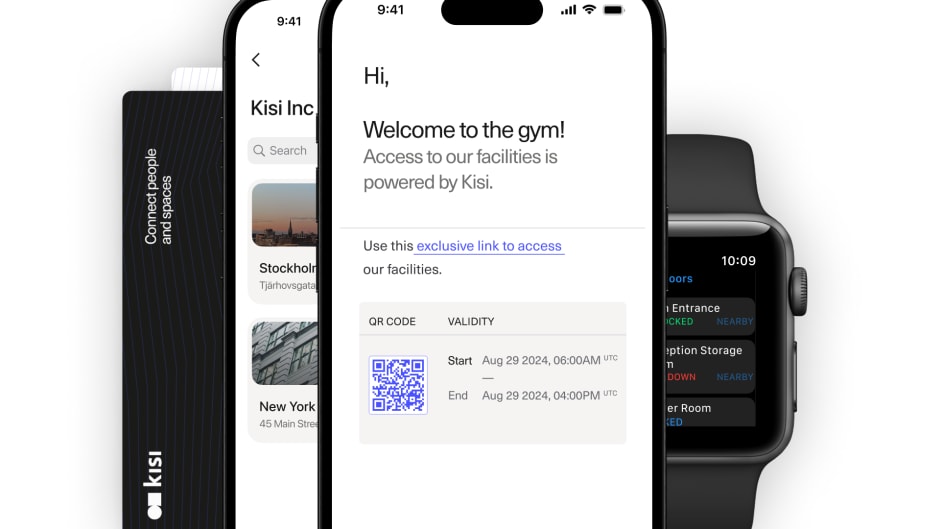
If you decide to open a gym, calculating rent and equipment costs is just a piece of a much bigger picture. How you manage access, security, and daily operations will shape both your startup budget and your long-term profitability. If you're planning a 24/7 or partially unstaffed facility, reliable access control should be part of you infrastructure from the beginning.
Kisi’s cloud-based access control helps gym owners manage member entry, automate permissions, and operate securely around the clock. It doesn’t matter if you're opening a small studio or scaling multiple locations. yYu can control access from anywhere and reduce operational overhead with smarter solutions. Reach out to learn more about gym access control, request a demo, or get a customized quote.

Bernhard Mehl
Bernhard is Co-founder of Kisi. His philosophy, "security is awesome," is contagious among tech-enabled companies.

